The Guards of the desert to the maze of Little Italy

As is often the case for those who stumble along the gringo trail, we were bound for the Atacama - the bone-dry mouth of the Earth - heading toward Bolivia, but before we’d even travelled a mile, everything had already slipped sideways. The whole thing began in chaos, which in hindsight, a perfect prelude. I don’t dare dig through the whole story - it twists and cuts like the desert roads it was cast upon - but I do think a list of the notable elements captures its sentiments well enough: an illegal desert rave, a sonorous biker-turned-bus-driver, travel bin bags, a misplaced bum bag, missing visa documents, whilst the unwelcome presence of a very unsuitable possession, being briefly marooned in a border town, and then a sprint in a taxi full of laughing Brazilian girls, chasing the border like it would vanish if we dared to blink.
Once finally on the other side of Chile, the road wounds upwards almost immediately. It’s not the heroic kind of mountain road that dodges snow-caps, but a slow, invisible climb. You don’t notice the change until you try to speak and find your voice thinner than it was five minutes before.
Altitude. Altitude, it seems, is the difference from which all the otherworldly brilliance of the Atacama stems. Alcohol hits harder, the air grows thin, and your brain turns slow, like syrup. Without making excuses, likely factor in all the confusion leading up to our departure. Memory also blurs. Memory blurs. Time in Bolivia drifted through a haze of headaches, exhaustion, and the strange irritability that arrives when your body forgets how to breathe. Everything dulled - smell, taste, hunger. You feel stripped down to function alone: a cheap mechanical pulse, far removed from the indulgent days behind us.

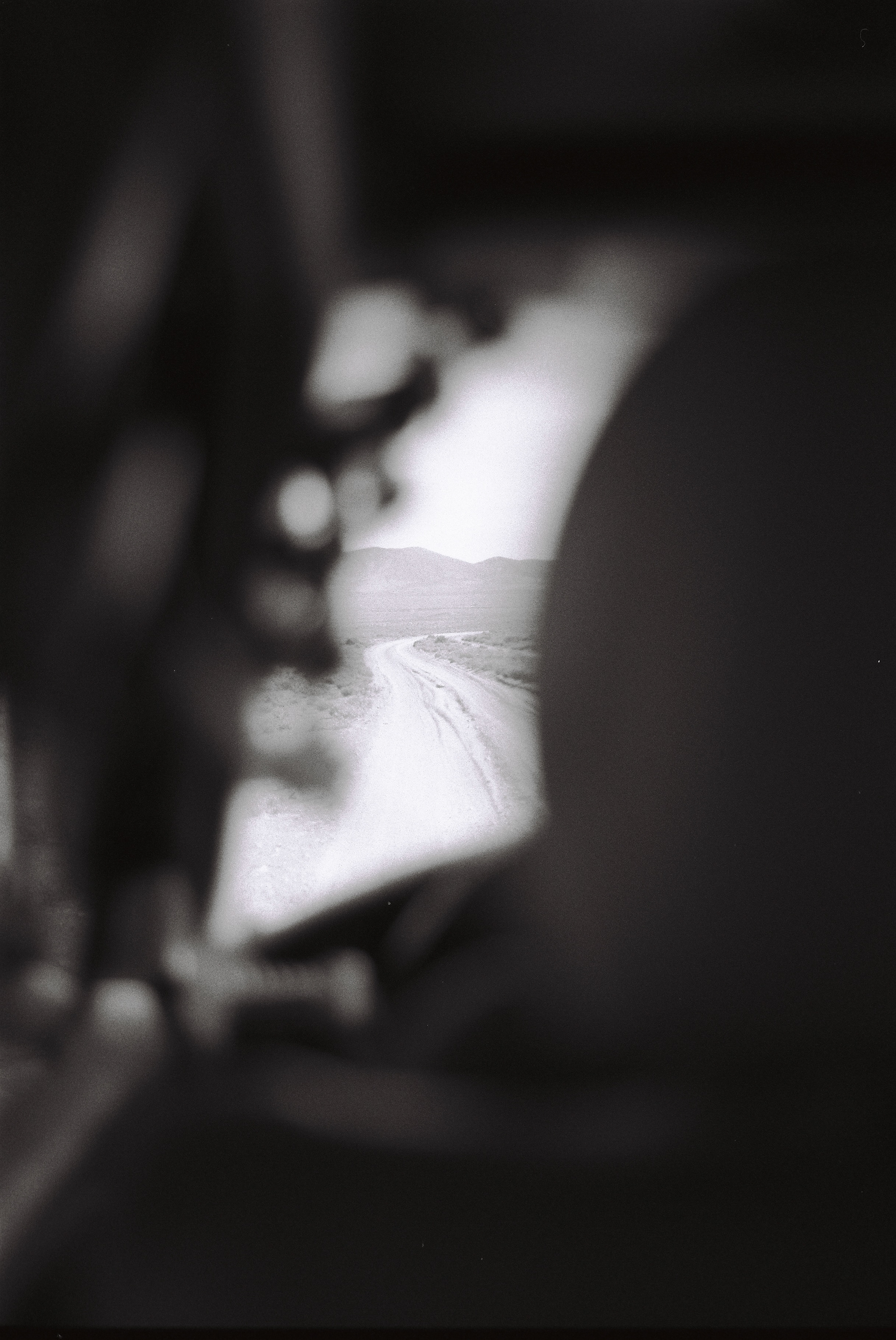
Nobody truly knows what causes altitude sickness - nor any sure remedy. Locals, however, believe that chewing coca leaves helps - the same leaves used to make cocaine. Over centuries, the leaf has taken on a sacred status in Bolivian culture; the act of chewing it carries the weight of a prayer. We came to suspect that our driver, Carlos, sustained himself almost entirely on coca leaves. We’d watch in the rear mirror as he crammed great handfuls into his taut cheeks, like a boy newly enamoured with sweets - jaw working slow and steady, eyes always elsewhere. He was a slice of a man - thin, wiry, calm-souled. He loved old British rock and took his time warming to us, but eventually he opened up, calling me gringo loco. Crazy white boy. I think he saw how the altitude was twisting me from the inside out.


The Atacama is so arid that NASA uses it to simulate conditions on the surface of Mars. Life survives here by what can only be a thousand different miracles, so unexpected it makes you question the existance of something greater. In the Valle de la Luna (“Valley of the Moon”) is where the land truly earns its extraterrestrial name: cliffs swell like frozen waves, and salt flats shimmer like ice beneath the sun’s dull, omnipresent glare. Even sound seems to splinter.
Carlos let us in on a secret: the names we were using for these places, like the Valle de la Luna, were not local but inventions for the tourists. Before the influx of Westerners in recent decades, this valley was known as Las Salinas — “the salt mines” — named for the industry that once sustained its people. It would seem then, as is the case in much of the world, name derived from purpose. So it was unnerving to learn, to the ancient Atacameños who came before even the Bolivians, the valley was known as Los Guardianes - “the guards.” A ceremonial space, believed to connect this world and the next.

We would stop every few hours at a new vista: rock mushrooms, chemical spills of nutrient rich pools, plains that made the sky feel too vast for our one planet. Always stranger, always lonelier, so that each place seemed purposed to humble you. I began to wonder whether our route followed any logic at all, or if it was structured to ensure that each stop one-upped the last - what could possibly follow a world-cup-shaped rock or a field of boiling geysers?
It was never the crassly named landmarks that conveyed the true feeling of the desert - which, I’d argue, is the real ‘attraction’. It happened on our second night, when our hotel had been accidentally over-booked. We were shunted on over to the next hotel, in the next, smaller village, down the darker, dustier tracks - a couple more hours added to our journey as the cost of such mishaps. But somewhere along that new route, the engine began weeping and weezing, choking for air. It was a desperate situation, as the night grew colder, so did the engine, demanding more combustion but only finding less and less oxygen. The knife kept twisting, and the darkness was suffocating our trusty Toyota, desperate to get up and run. I can’t remember whether Carlos turned off the headlights to save power, or if it was that we realised how easily we could be trapped out there - but suddenly the desert swallowed everything. We were a car-shaped bubble of phone lights in a black so total it erased the idea of direction altogether. The silence pressed down, and I realised how easily you could go mad out there.


One ‘attraction’ did however, stand apart from the rest in its. Carlos referred to it as Little Italy, and said it had earned its name from local myth. Decades ago, its said a European man came to the Atacama to document its treasure of strange rock formations. Villagers told him that the most peculiar ones lay in a particular spot - a craggy maze of bulbous cliffs and razor-sharp spires, sculpted by centuries of erosion in symphony - but it was a few days hike and notoriously dangerous. When continental plates clashed, they’d lifted the terrain into an oddly precise rectangle, about a mile square. The Italian made it, that they know, because they found his belongings among the rocks - but of the man himself, no trace of him ever again. Days must have passed as he wandered deeper in the maze, the heat driving him slowly mad.
A thousand myths bloomed from his absence, of something breaking the expected mold of things. We are always more enamoured by possibility in this way - by the open questions that invite our imagination to fill a gap. What happened to this Italian explorer? What lies beyond the window of a car swallowed in desert night?
And the strangest thing is this: I can find no record of him, nor any mention of Little Italy anywhere. Could Carlos have made it up? Could I?
Perhaps it doesn’t matter. Out here, truth seems a small thing - laughably delicate and similarly irrelevant against the presence of such colossal forces.
